
Randolph County Arrest Log Sources
The Randolph County Sheriff's Office publishes no standalone 72-hour or weekly arrest log. Its official inmate roster reaches further back than a few days, though it works as a current custody list rather than a narrative blotter. Each row carries a booking date and basic identity fields. The page names no arresting agency, no charges, no bond, and nothing about whether a person has been released.
The main multi-day source is The Randolph Leader. The paper's dated reports frame a period, such as "week ending," and then list sheriff or municipal police arrests. A 2025 report splits sheriff arrests from Roanoke arrests. An older combined piece adds Roanoke, Wedowee, and Wadley police sections. That agency and date context is genuinely useful. Just remember these are secondary news summaries, not live jail data, and there is no guarantee every arrest made the list.
Read Randolph County Police Reports
The smart order is simple. Begin with official custody data. Add a dated report only for agency context. That sequence keeps an old news entry from being mistaken for a current jail status.
- Check the sheriff roster for the exact name and note the booking date and roster update line.
- Open The Randolph Leader’s local news archive and locate a sheriff or city police report covering that date.
- Read the internal period label and determine whether the item belongs to the sheriff, Roanoke, Wedowee, or Wadley section.
- Attribute charge wording and residence details to the news report, since those fields are absent from the roster.
- Use the jail or Circuit Clerk for current custody, the official booking record, and later court disposition.
Something from today calls for a different tool. The Randolph County 24 Hour Arrests workflow targets the newest roster rows and fast confirmation rather than the weekly reporting cycle.
The Randolph Leader's dated sheriff report lays out the week-ending format:
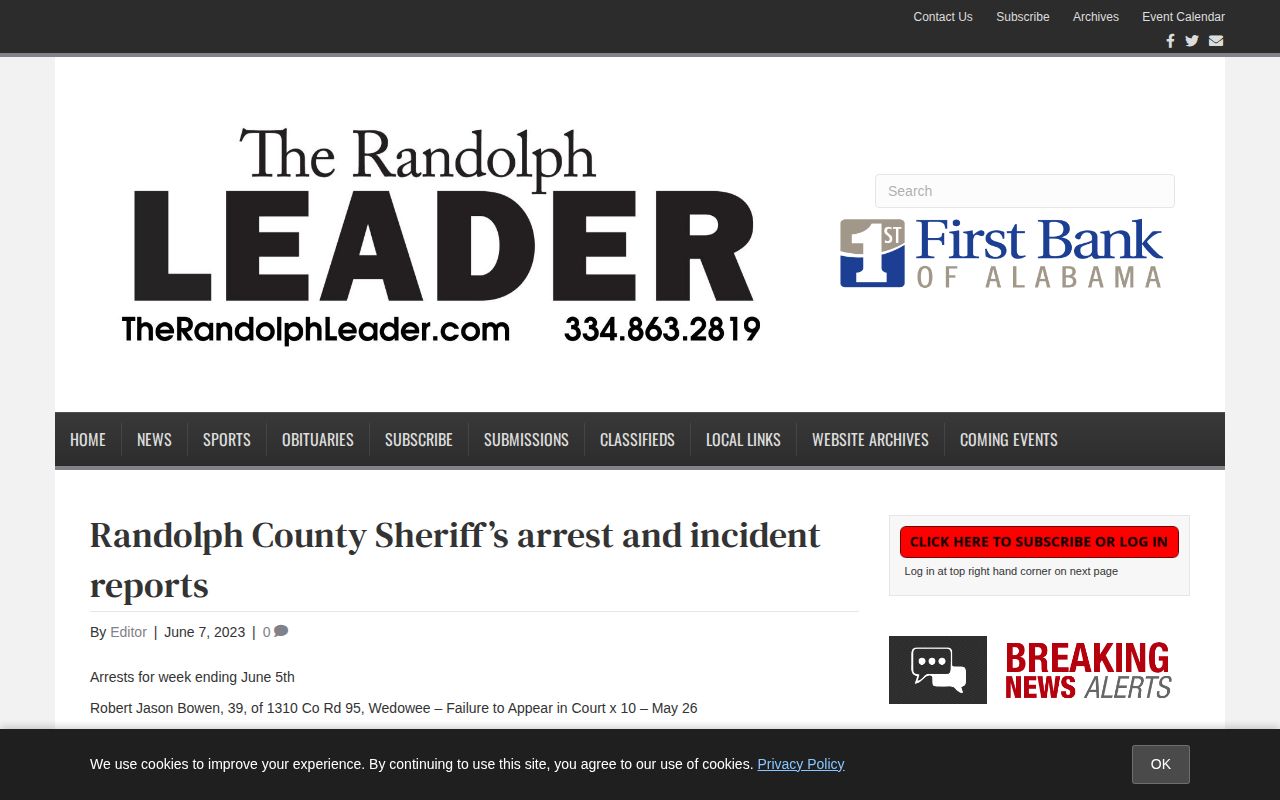
That week-ending label matters. It marks the report as a closed date range, not a live booking screen.
Randolph Arrest Report Fields
The two layers expose different fields, so keep their claims separate. The roster stands as the official word on whatever its public table displays. The newspaper's text supplies only what its reporters wrote.
| Field | Where and how it appears |
|---|---|
| Name | Appears in both layers; verify spelling and identity against the official source. |
| Booking or arrest date | The roster shows booking date without time; news reports may state an arrest date within a weekly range. |
| Age and residence | The paper may report both; the roster shows age but no residence. |
| Charge description | May appear in the news report but is absent from the visible sheriff roster. |
| Agency section | The paper can separate sheriff and city police reports; the roster has no arresting-agency field. |
| Photo | The roster displays a Photo column; sampled news reports did not establish a mugshot gallery policy. |
Bond, case numbers, release reasons, court dates, and dispositions sit outside the roster table. Those facts come from the proper custodian or the court. Preserve each source's own wording along the way.
Dates can trick you here. A newspaper may report the day officers acted, while the jail table records only the booking date entered in its system. Without an official time field, the two should not be forced into an exact sequence. Residence is another trap. A city listed beside a name tells you where someone lives, not where the arrest happened, unless the report says so outright. Careful attribution keeps the weekly log useful without inventing facts the source never printed.
Randolph Weekend Arrest Reporting
Randolph County posts no official weekend or holiday schedule. The detention center runs around the clock, but the roster's web refresh and the newspaper's publication cycle move on separate clocks. A booking late Friday, over a holiday, or near a report cutoff can surface after a reader expects it. A delay is not evidence the arrest never happened.
The paper's samples show recurring period-end reporting, not a fixed promise that every week lands online at the same hour. One report may also fold sheriff arrests in with a city department's entries. Check the headings and date span each time. For a current answer, call the detention center. For a broader record path, the Randolph County recent arrests hub collects the county's options.
The combined sheriff and Roanoke report shows the agency-separated layout that the jail roster never provides.
Randolph Arrest Archives and Retention
The Randolph Leader's web archive runs deep, with pages reaching back to at least the late 2000s. Depth is not completeness, though, and no evidence proves every reporting week survives online. The sheriff roster itself carries entries dating into 2023, while the county makes no online retention promise. A row vanishing from the roster does not mean the official record was destroyed, and an old news item staying up does not mean the person is still held.
Alabama sets minimum retention and disposal rules for local governments through Records Disposition Authorities. The Alabama Department of Archives and History local-records guidance explains that local officials must obtain commission approval before destroying any record. No Randolph-specific online schedule names electronic roster rows or booking photos, so a 30-day, 90-day, or annual retention claim would have no basis.
For an older official entry, start with the detention center or the sheriff's records custodian. Filled sheriff prisoner record books may pass to the Randolph Circuit Clerk under the statutory framework summarized in the Alabama Sheriffs' Handbook. The official RDA search or ADAH staff can then identify the record series and years. Ask narrowly: one person, one booking date range, one maintained record.
The Randolph Leader local-news archive is here:
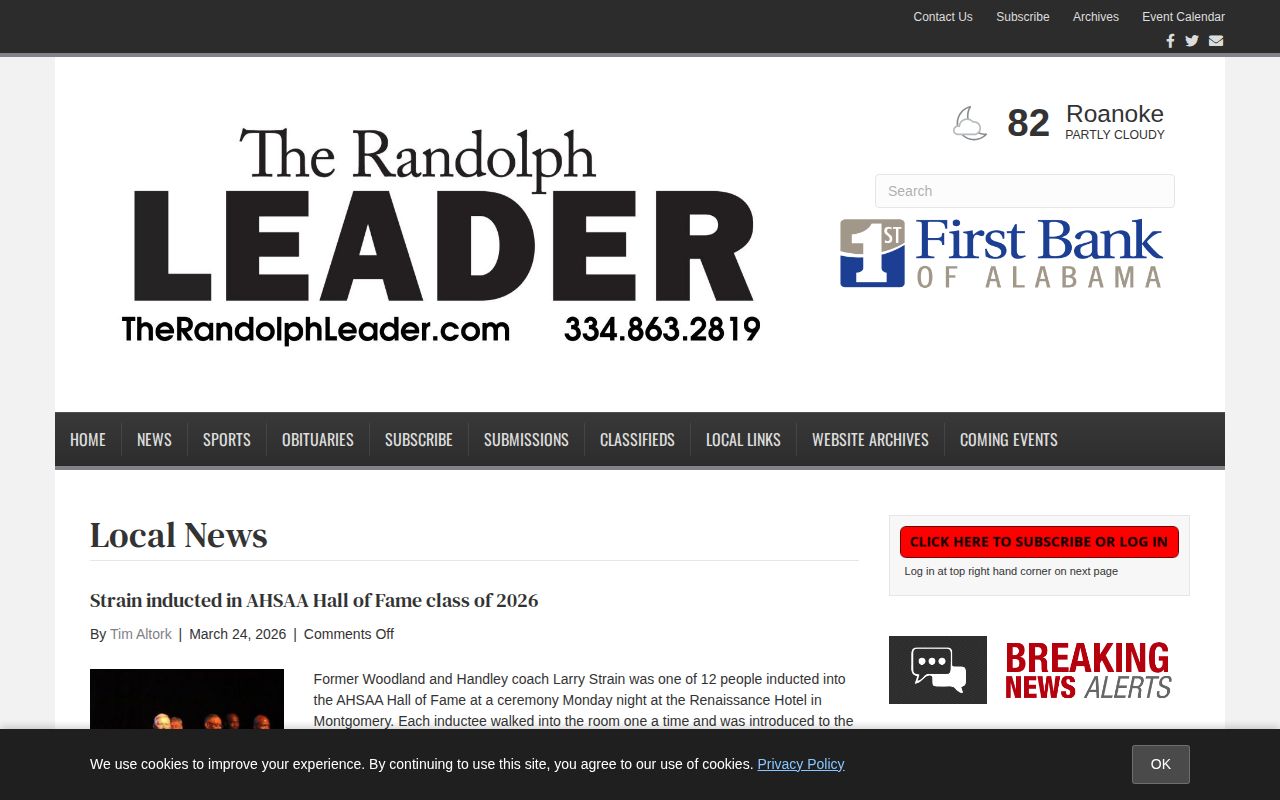
Archive searches can point you toward a Randolph County report, though every arrest record still deserves a custody or court cross-check before you rely on it.
Note: Web visibility, agency retention, newspaper archiving, and search-engine indexing are four different ways an arrest record persists.
Unofficial Randolph Booking Archives
Beyond official records and local news, two commercial sites collect Randolph County booking data as a secondary lead. The RecentlyBooked Randolph page lets you filter by name, charge, date range, and gender, with sort controls for browsing. The Busted Newspaper Randolph County page posts individual booking items with dates attached. Both can lag behind reality. Entries may duplicate one another, drop context, or sit online long after a person's custody status changed. Neither site tells you who is in the Randolph County jail right now.
Search with the Alabama and Randolph County labels spelled out. A generic query can pull in Randolph counties from other states, and a sloppy Busted Newspaper path can land you on a person named Randolph instead of this county. Page counts and running totals on these sites shift constantly, so treat them as leads rather than local arrest statistics. Any charge, bond, agency, or booking photo a commercial source displays should stay attributed to that source until the sheriff or court confirms it.
The RecentlyBooked local section displays its current listing of Randolph County bookings.
Think of these sites as a discovery aid and nothing more. For any Randolph County arrest, the sheriff roster and the office that holds the original record remain the controlling sources.
Arrest Reports Are Not Verdicts
Charge text on an arrest report reflects what officers reported at the booking stage, and it can shift later through amendment, dismissal, or further court action. A booking photo identifies the person listed in a public roster table. Careful wording matters here. Say "booked," "listed," "charged," or "reported" rather than anything stronger, unless a sourced court result backs you up. Juvenile, youthful-offender, sealed, and expunged material can be lawfully withheld, so a missing entry is not a gap to fill from an unrelated archive.
The Randolph Circuit Clerk and statewide court access tools come in after the blotter, not before. Once an arrest report gives you a name and a date, they help you find the case. Access may require a case number, a name search, a subscription, or an on-demand purchase, depending on the service. The clerk supplies information and instructions, not legal advice. Watch for spelling variations, and avoid merging two people just because the arrest report lists the same age or town.
When an official record and a news archive disagree, keep both dates and label each by its source. Ask the office that maintains the record to correct its own entry. A stale search-engine result can linger after the source updates, and that is a separate matter from whether the Randolph County arrest record is still held under an approved retention schedule.